
Depression Counseling Yuba City: Breaking Through the Cloud and Finding Your Way Back
Depression has a way of convincing you that it is just the way things are — that the heaviness, the emptiness, the inability to feel anything at all is simply who you have become. It is not. Depression is a condition, not a character trait. It is treatable, it is not your fault, and you do not have to wait until things get worse before you ask for help. Depression counseling in Yuba City at Everyday Counts Therapy Services is designed to help you break through the fog, understand what is driving your depression, and rebuild a life that feels worth living again — step by careful step, at a pace that works for you.
What Depression Really Feels Like — Beyond the Textbook

Most people know the clinical description of depression — persistent sadness, loss of interest, low energy. But the lived experience of depression is often more complex and more surprising than a checklist can capture. Many people who are depressed do not feel profoundly sad. They feel nothing — a gray, flat blankness that makes even the things they used to love seem distant and pointless.
Others experience depression primarily as irritability, restlessness, or a short fuse — snapping at people they love and feeling ashamed about it afterward. Some people function reasonably well on the outside — going to work, maintaining routines — while feeling completely hollow on the inside. This is sometimes called "high-functioning depression" or dysthymia, and it is just as real and just as deserving of care as more severe presentations.
Depression is also deeply physical. It lives in your body as much as your mind — in the heaviness that makes getting out of bed feel like climbing a mountain, in the appetite that disappears or becomes insatiable, in the sleep that is never restful no matter how many hours you get.
Common Signs That Depression Counseling in Yuba City Could Help You
If you recognize yourself in several of these, please know: what you are experiencing is real, it has a name, and there is effective help available right here in Yuba City. Visit our Depression Therapy page to learn more about how we approach this work.
Myths About Depression That Keep People from Getting Help
Stigma and misinformation about depression are still widespread — and they cost people years of unnecessary suffering. Here are some of the most common myths, and the truth behind them:
| ❌ Myth | ✓ Reality |
|---|---|
| "Depression isn't real — it's just feeling sorry for yourself." | Depression is a recognized medical condition with measurable biological, psychological, and social components. It is no more a choice than diabetes or a broken bone. |
| "If I were stronger, I could just snap out of it." | Depression has nothing to do with strength or character. Some of the most resilient, high-achieving people struggle with depression throughout their lives. |
| "I don't have a reason to be depressed, so it can't really be depression." | Depression does not always have an obvious cause. Neurological, hormonal, and genetic factors can produce depression even when life circumstances appear fine on the surface. |
| "Therapy is only for people with serious problems." | Depression counseling is effective for mild, moderate, and severe depression. Catching it early produces the fastest results — waiting only lets it deepen. |
| "I should be able to handle this on my own." | You would not try to set a broken bone on your own. Depression is a health condition that responds to professional treatment — asking for help is the smart move, not the weak one. |
How Depression Counseling Works at Everyday Counts

At Everyday Counts Therapy Services, depression counseling in Yuba City is never a cookie-cutter process. Kendra Davis (LCSW) and her team invest time in truly understanding your story — the history of your depression, the circumstances that sustain it, and the unique strengths and resources you already carry. From there, your therapist builds a personalized treatment plan drawing on the most effective tools available:
Cognitive Behavioral Therapy (CBT) for Depression
CBT is one of the most extensively researched and effective treatments for depression. It works by identifying the negative thought patterns that fuel depressed mood — thoughts like "nothing will ever get better," "I am a failure," or "nobody really cares about me" — and methodically testing and restructuring them. Over time, CBT helps you build a more accurate, balanced inner dialogue that supports rather than undermines your mood.
Behavioral Activation
Depression creates a vicious cycle: you feel too low to do things, so you do less, which gives depression more space to expand. Behavioral activation interrupts this cycle by strategically re-introducing meaningful activity — not forcing happiness, but gradually rebuilding engagement with life. Your therapist helps you identify small, achievable steps that create momentum without overwhelming you.
Trauma-Informed Depression Therapy
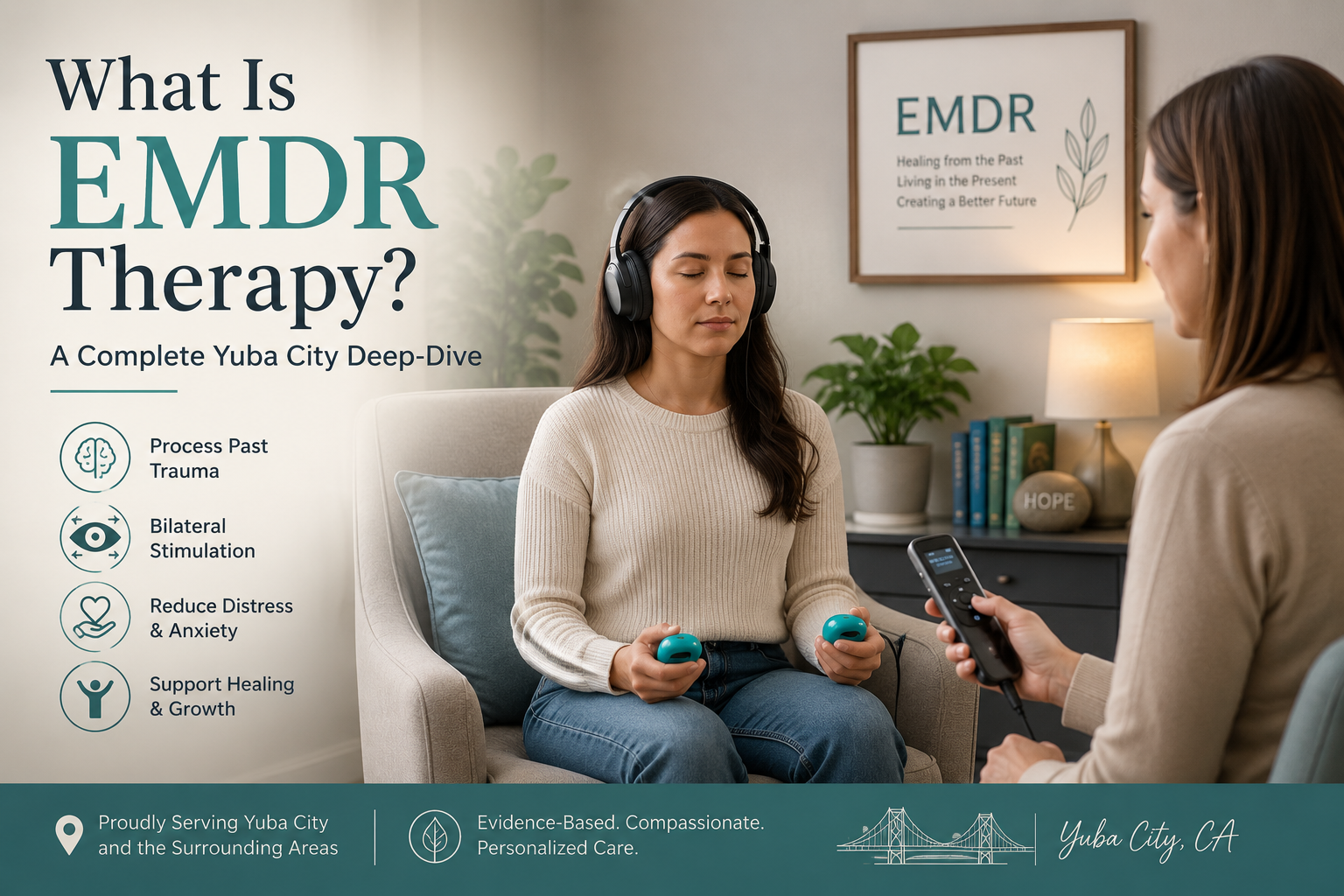
Depression is frequently rooted in unresolved trauma — childhood experiences, loss, abuse, or prolonged stress that the nervous system never fully processed. When this is the case, treating the depression without addressing the trauma beneath it produces only limited results. At Everyday Counts, your therapist will assess for trauma connections and integrate approaches like EMDR where appropriate.
DBT Skills for Emotional Regulation
Dialectical Behavior Therapy skills are particularly valuable when depression involves intense, difficult-to-regulate emotions — or when it is accompanied by self-destructive urges or impulsive behavior. DBT provides concrete, practical tools for tolerating distress and building a life worth living, skill by skill.
Mindfulness-Based Approaches
Research consistently shows that mindfulness practices reduce both the severity and recurrence of depression. Your therapist will teach you to observe depressive thoughts as mental events — not absolute truths — reducing their power to determine how you feel and what you do.
Depression and chronic illness: Many Yuba City residents managing chronic health conditions — pain, autoimmune disease, diabetes, heart disease — also struggle with depression. The relationship runs in both directions: chronic illness increases depression risk, and depression makes physical symptoms harder to manage. Everyday Counts offers specialized support for this intersection, helping you address your mental and emotional health alongside your physical wellbeing.
Depression and Its Connections: Trauma, Anxiety, and Grief

Depression rarely arrives in isolation. At Everyday Counts, we understand that depression is most often part of a broader picture — intertwined with other experiences and conditions that require attention alongside it:
- Trauma: Unprocessed trauma is one of the most common drivers of depression. Addressing it through approaches like trauma therapy and EMDR often produces breakthroughs that talk therapy alone cannot.
- Anxiety: Depression and anxiety co-occur so frequently that many clinicians treat them as closely related conditions. Your therapist will address both dimensions if anxiety is part of your experience.
- Grief and loss: The loss of a person, a relationship, a role, or a life stage can trigger depression that requires more than time to heal.
- Complex PTSD: C-PTSD and depression overlap significantly, particularly for those who experienced prolonged or childhood trauma. Your therapist at Everyday Counts is skilled at navigating this complexity.
What to Expect When You Begin Depression Counseling in Yuba City
Starting therapy can feel daunting — especially when depression has already depleted your energy and your hope. At Everyday Counts, we have designed the intake experience to be as low-effort and low-pressure as possible. You do not need to have the right words. You do not need to know exactly what is wrong. You just need to make one call or send one message — and we will take it from there.
Your first session is a conversation, not an evaluation. You will have space to share what has been happening at whatever level of depth feels right, ask questions about the process, and get a sense of whether Everyday Counts feels like the right fit for you. From there, your therapist will work with you to develop a clear, compassionate roadmap for your recovery.
Most clients begin to notice meaningful improvements within the first several weeks of consistent counseling — not because therapy is a quick fix, but because having the right support in place creates momentum. Depression loses its grip gradually, and then suddenly. The key is starting.
Rediscovering Joy: Life After Depression Treatment
What does life look like on the other side of depression? For many Everyday Counts clients, it looks like waking up and actually wanting to get out of bed. It looks like laughing and meaning it. It looks like being present with the people they love instead of watching life through a pane of glass. It looks like being able to imagine a future worth looking forward to.
Recovery from depression is not about becoming a different person. It is about reconnecting with the person you have always been — the one the depression temporarily buried. That person is still there. And they deserve to come back.
Explore the full range of therapy services at Everyday Counts, or read answers to common questions on the Therapy FAQ page. When you are ready, we are here.
Depression does not have to be your default.
Start depression counseling in Yuba City today. New clients welcome — in-person and virtual sessions available. Most insurance accepted.
Serving Yuba City and the Greater Sutter County Area
Everyday Counts Therapy Services is proud to serve individuals and families throughout Yuba City, Marysville, Linda, Olivehurst, Live Oak, Gridley, and the broader Sacramento Valley. With two convenient Yuba City office locations and virtual sessions available, compassionate depression counseling is always within reach.
Joy is not gone forever. It is waiting. Reach out today and take the first step toward finding it again.
Everyday Counts Therapy Services · 1445 Butte House Road, Suite A & 1007 Live Oak Blvd, Suite B-1 · Yuba City, CA 95993 · (530) 770-1242 · Most insurance accepted · In-person & virtual sessions available.
If you or someone you know is in a life-threatening or urgent situation, please call 911 or the 24-hour Sutter-Yuba Behavioral Health crisis line at 888-923-3800.