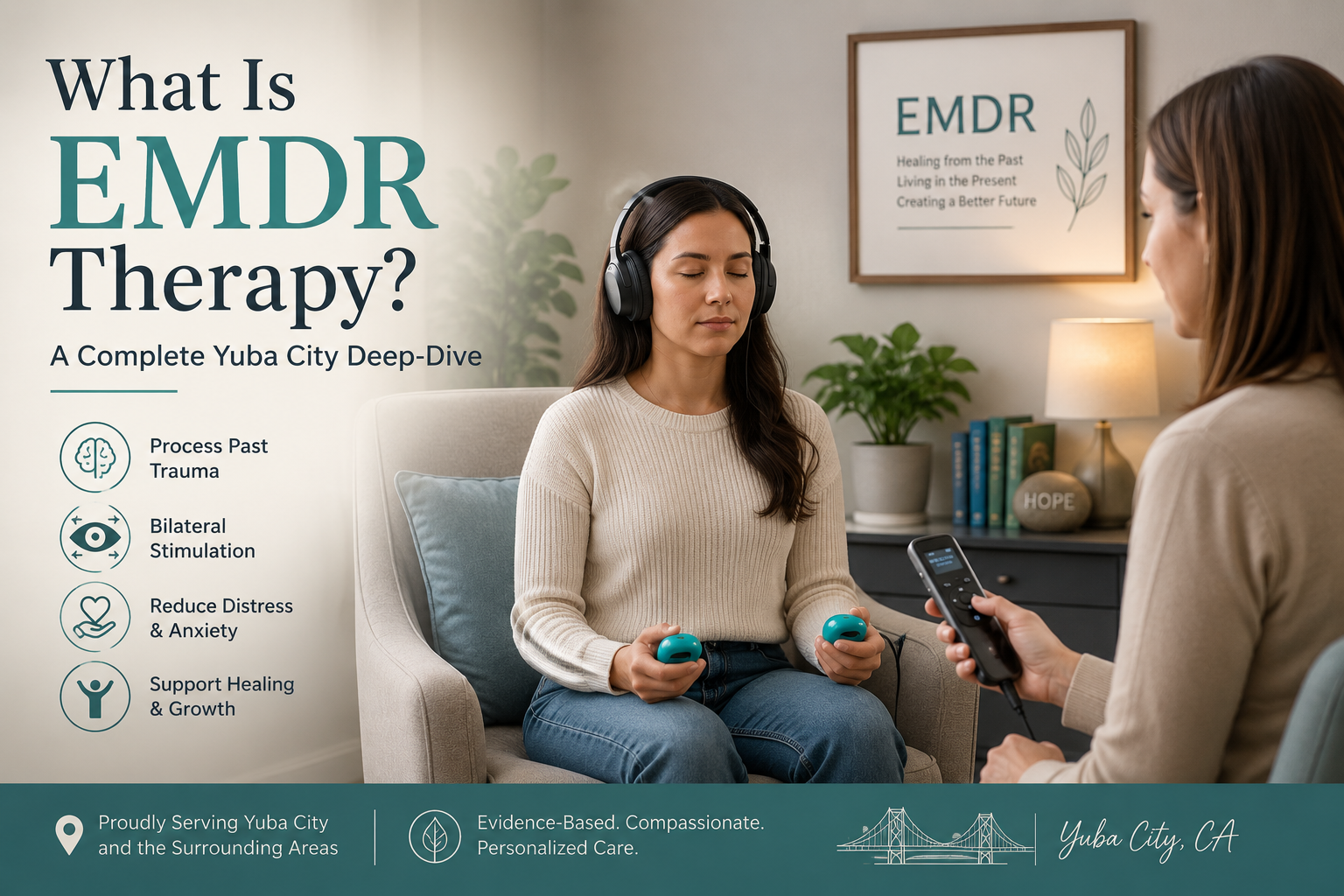

You may have heard the term from a friend, a podcast, or a quick online search — but what exactly is it, and could it help you? EMDR in Yuba City is becoming one of the most sought-after therapies for trauma, anxiety, and painful memories, and for good reason. At Everyday Counts Therapy Services, we help people across the Yuba-Sutter region understand EMDR and experience its benefits firsthand. This introduction breaks down the essentials in plain language, so you can decide whether EMDR might be right for you.
EMDR in Yuba City: The Basics

Photo by Milad Fakurian on Unsplash
EMDR stands for Eye Movement Desensitization and Reprocessing. It's a structured therapy that helps people heal from the emotional distress caused by difficult or traumatic life experiences. Rather than relying primarily on talking through your problems, EMDR works directly with the way your brain stores and processes memories.
Here's the core idea: when something overwhelming happens, the memory can get "stuck" in your nervous system in a raw, unprocessed form. That's why certain memories can feel just as painful and vivid years later as they did at the time. EMDR helps your brain reprocess those stuck memories so they settle into the past — where they belong.
How Does EMDR Work?
During EMDR, your therapist guides you to briefly recall a distressing memory while simultaneously engaging in bilateral stimulation — usually moving your eyes back and forth, tapping, or listening to alternating tones. This dual attention appears to help the brain reprocess the memory, reducing its emotional intensity.
Over time, memories that once triggered anxiety, fear, or shame begin to feel more neutral — like ordinary events from your past rather than active wounds. Many people describe it as finally being able to think about something difficult without being overwhelmed by it.
Who Can Benefit from EMDR?

EMDR was originally developed for trauma and PTSD, but it has since been shown to help with a wide range of concerns — including anxiety, depression, grief, phobias, and the lingering effects of childhood experiences. If painful memories or emotional patterns are getting in the way of the life you want, EMDR may be worth exploring.
At Everyday Counts, EMDR is often part of a broader plan that may also address depression, trauma and abuse, or complex PTSD. For a deeper look, see our full guide on how EMDR therapy works.
Available in Yuba City, in-person or online: Everyday Counts offers EMDR at two Yuba City locations and virtually across the region — so you can access this care in whatever way feels most comfortable for you.
Getting Started with EMDR in Yuba City
If EMDR sounds like it might be a fit, the next step is simply a conversation. At Everyday Counts Therapy Services, your first session is a chance to share what's been on your mind, ask questions, and learn how EMDR could help in your specific situation — no pressure, no commitment required.
With 20 years of experience and a warm, non-judgmental approach, our team makes starting EMDR as comfortable as possible. Explore our services or Therapy FAQ to learn more.
Curious whether EMDR is right for you?
Everyday Counts Therapy Services offers EMDR in Yuba City — in person and virtually. New clients welcome.
Serving Yuba City and the Greater Sutter County Area
Everyday Counts Therapy Services offers EMDR to clients throughout Yuba City, Marysville, Linda, Olivehurst, Live Oak, and the broader Sacramento Valley. Reach out today to learn more.
Everyday Counts Therapy Services · 1445 Butte House Road, Suite A & 1007 Live Oak Blvd, Suite B-1 · Yuba City, CA 95993 · (530) 770-1242 · Most insurance accepted · In-person & virtual sessions available.
If you or someone you know is in a life-threatening or urgent situation, please call 911 or the 24-hour Sutter-Yuba Behavioral Health crisis line at 888-923-3800.